

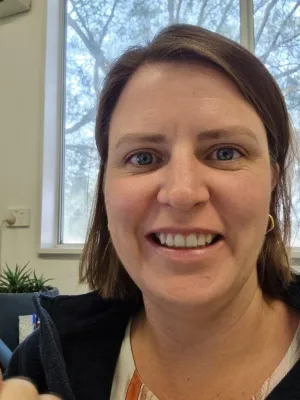
When Hannah Cooke started her plant biosecurity career in the Northern Territory, she was clearing fruit fly traps around Darwin. Ten years later, she is helping shape plant health policy, contributing to national committees and serving in a leadership role as Deputy Chair of the Subcommittee on National Plant Health Surveillance (SNPHS).
It's a journey that has given her a unique perspective on surveillance, from collecting data in the field to understanding how that information supports market access, trade and plant health decision-making across Australia.
"I started out just doing fruit fly surveillance and clearing traps in Darwin," Cooke says.
Before joining the NT Government's plant biosecurity team in 2016, Cooke had worked in weed biosecurity in Victoria, focusing on state prohibited weeds and stakeholder engagement. Over the years, various projects, career opportunities and raising three children have taken her into different areas of plant biosecurity, but she has remained connected to surveillance throughout.
Seeing Beyond the Trap Line
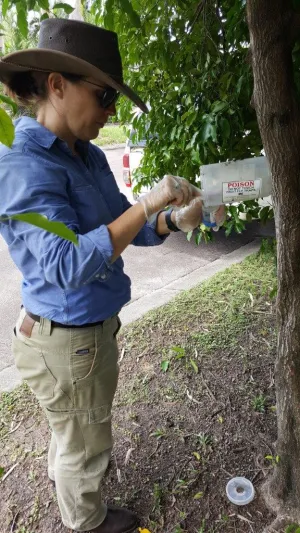
One of the biggest shifts in Cooke's career came from moving beyond operational surveillance and into policy and market access. That experience helped her understand how surveillance activities contribute to a much larger system.
"It's a whole wide world out there," she says. "You can get blinkers on a bit and go, 'This is what I'm doing,' but you're not really considering how it fits into that wider picture." For surveillance professionals, it's a message that will resonate. Whether collecting samples, servicing traps or entering data, every activity contributes to demonstrating pest freedom, supporting trade and protecting industries and the environment.
Cooke believes understanding that connection is important for anyone working in surveillance. "You can go right from just doing the surveillance, but not knowing why you're doing it, to having that drive to understand why are we doing it this way, or how does this feed into that bigger picture."
Surveillance in the Territory
Working in the Northern Territory means dealing with conditions unlike almost anywhere else in Australia. From the tropical Top End to the arid centre, surveillance programs must operate across vastly different climates, landscapes and pest risks.
Cooke notes that nationally developed policies and strategies can sometimes be heavily influenced by conditions in Australia's more populous southern regions. "We've got an extremely different climate," she says. "We've got the arid centre here where I am in Alice, then right up into the tropical areas of Darwin."
The Territory's geographic isolation creates logistical challenges, but it can also provide biosecurity advantages in limiting the potential for the spread of pest and disease.
Technology is Changing the Game
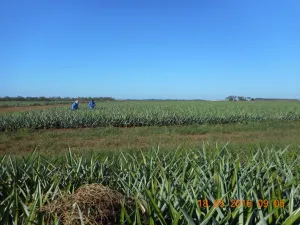
Although it has only been a decade since Cooke entered surveillance, she has already seen major changes in how field activities are conducted. "When I started, it was all paper and clipboard," she says. Field records needed to be manually captured, returned to the office and processed before they became useful. Today, much of that work is captured digitally, providing near real time access to surveillance data.
"It's all iPad-based now," Cooke says. "You just tick whatever box you need to and then it is all up on the database when you get back to the office." The result is faster reporting, more efficient data capture, more consistent data quality and quicker access to information.
Cooke is also excited by emerging surveillance technologies, from environmental monitoring tools to improvements in trap design. One project currently being trialled in the Northern Territory involves the team using 3D printing to produce their own fruit fly traps. For Cooke, innovations like these are helping make surveillance more efficient while opening up new possibilities for the future.
The Skills That Matter
Ask Cooke what she enjoys most about her work and the answer comes quickly: variety. "No two days are the same," she says.
For those interested in a career in plant biosecurity surveillance, Cooke says curiosity is just as important as field skills. A good surveillance officer needs to enjoy being out in the field, but also be interested in understanding the reasons behind surveillance design and data collection.
When asked what advice she would give others starting out in plant biosecurity, Cooke's answer is simple: "Taking those opportunities that are presented to you." She encourages people to embrace new challenges, even when they feel uncomfortable. "You might think, 'That doesn't really speak to me all that much,' or 'That makes me feel really uncomfortable.' Still just put yourself in that situation because you're only going to grow from it."
That approach helped drive her into leadership roles with SMART (the Subcommittee on Market Access, Risk and Trade) and now SNPHS.
Cooke says networking with colleagues and learning from others is also really important. She mentions NT Chief Plant Health Officer Sally Heaton as someone she looks up to professionally. "She's got that great balance of being really personable but also has the technical knowledge and that strategic focus.”
Advice for Future Subcommittee Members
For surveillance professionals considering a role on a subcommittee, Cooke has a reassuring message about workload expectations. "Just remember that it ebbs and flows." Leading up to meetings there can be a flood of papers to review. "You'll get bombarded with all the papers and you'll be like, 'How am I going to get through all of this?' But it only happens twice a year." For Cooke, the opportunity to collaborate nationally, contribute expertise and grow professionally makes the investment worthwhile.
As she looks ahead to her SNPHS leadership role, she is keen to ensure members feel engaged and empowered. "I want people to understand how they can actively have a voice and contribute to the work."
Hannah Cooke is based in Alice Springs and works with the Northern Territory Government's Plant Biosecurity team. She currently serves as Deputy Chair of the Subcommittee on National Plant Health Surveillance (SNPHS) and brings experience spanning surveillance operations, market access, policy development and plant health governance. Connect with Hannah on LinkedIn.